

In today’s fast-paced digital world, abbreviations and acronyms dominate messaging apps, social media, and texting platforms. One term you’ve probably stumbled upon is SFS. But what does it actually mean? 🤔
Whether you’re scrolling through Instagram, Twitter, or Snapchat, understanding SFS meaning in text can help you engage effectively and avoid misunderstandings. In this guide, we’ll break down everything from its origin to real-life examples, plus tips to use it safely online. 🌐✨
📖 What Does SFS Stand For?
SFS is an abbreviation commonly used on social media and in texting. It typically stands for:
- Shoutout for Shoutout – the most popular meaning on Instagram and TikTok.
- Follow for Follow – sometimes used interchangeably in social media growth tactics.
- Occasionally, SFS may have niche or context-specific meanings depending on communities. 🧩
Understanding the context is key because the meaning can vary slightly depending on the platform. 📲
📝 Origin of SFS
The term SFS originated in the early days of social media platforms like Instagram and Twitter around 2012–2014. Users began collaborating to grow their follower base by giving each other “shoutouts” or engaging in mutual promotion. 🤝
Fun Fact: Early Instagram influencers often used SFS posts to boost engagement and gain more followers rapidly. 📈
📊 SFS Usage Across Social Media Platforms
SFS is widely used across platforms, but its application varies:
| Platform | SFS Usage | Notes |
|---|---|---|
| Shoutout for Shoutout | Most common; users tag friends to promote each other. | |
| TikTok | Shoutout for Shoutout / Follow for Follow | Used in video captions to encourage mutual engagement. |
| Twitter/X | Follow for Follow | Often used to increase followers quickly. |
| Snapchat | Shoutout for Shoutout | Less common but used in story mentions. |
💡 How SFS Works
The concept of SFS is simple but effective:
- Step 1: User A posts a shoutout featuring User B.
- Step 2: User B reciprocates with a shoutout featuring User A.
- Step 3: Followers of both users engage, like, and follow, increasing visibility.
It’s essentially a mutually beneficial growth strategy. 🌱
📌 Real-Life Examples of SFS Posts
Here are some practical examples you might see on social media:
- Instagram: “SFS with @username! Check them out! 💖 #SFS”
- TikTok: “Follow for follow, SFS with @creator 👀”
- Twitter: “Doing SFS! Tag your fav account! 🔥”
These posts are often paired with hashtags like #SFS or #ShoutoutForShoutout to maximize reach. 📈
🔑 Tips for Using SFS Safely
While SFS can boost your visibility, it’s important to use it wisely:
- Only engage with trusted accounts to avoid scams or spam. 🚫
- Set clear boundaries—don’t overdo SFS to maintain authenticity. ✨
- Use hashtags strategically to reach the right audience. #GrowthHacks 🏷
- Track engagement to see which SFS posts are effective. 📊
🧠 Why SFS Became Popular
SFS gained popularity because it:
- Encourages mutual support in online communities. 🤝
- Helps users grow followers organically. 🌱
- Promotes engagement in comments and likes. 💬
- Allows micro-influencers to network effectively. 🌟
📈 Benefits of Using SFS

- Boosts social media visibility instantly.
- Strengthens community connections.
- Encourages collaboration over competition.
- Can increase followers without paid promotions.
⚠️ Common Misconceptions About SFS
- Not everyone uses SFS for genuine growth—some may use bots. 🤖
- SFS ≠ guaranteed followers; engagement quality matters. 💡
- It’s not spam if used correctly, but misuse can annoy followers. 🚨
🛠 SFS vs. Follow for Follow
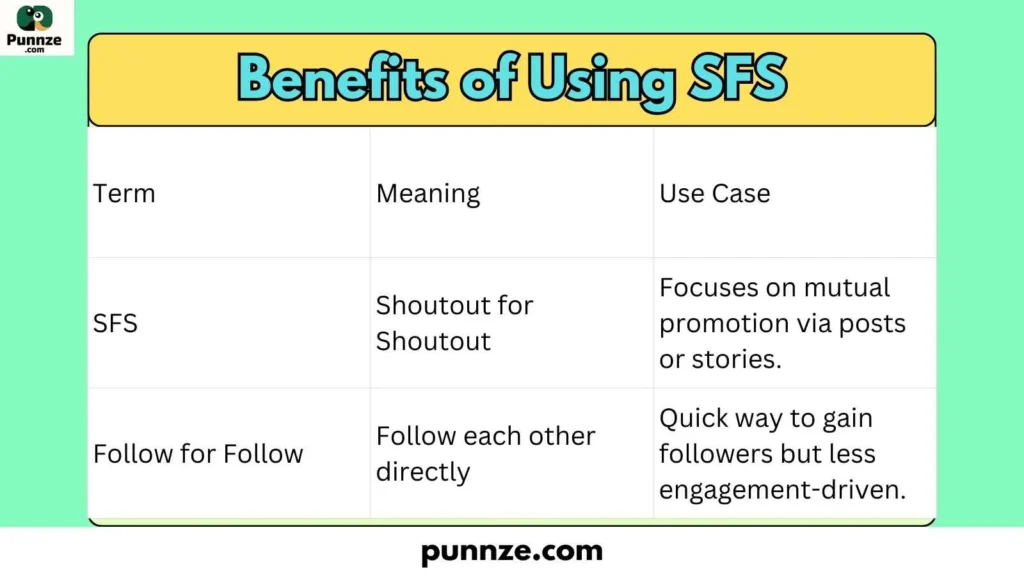
While often confused, there’s a subtle difference:
| Term | Meaning | Use Case |
|---|---|---|
| SFS | Shoutout for Shoutout | Focuses on mutual promotion via posts or stories. |
| Follow for Follow | Follow each other directly | Quick way to gain followers but less engagement-driven. |
💬 Examples in Conversations
Here’s how SFS might appear in text messages or chat apps:
- “Hey! Wanna do SFS on Insta? 🌟”
- “Sure, we can SFS tomorrow, I’ll tag you in my story! 📸”
- “Don’t forget to use #SFS for max reach!”
📚 Advanced Tips for Maximizing SFS
- Pair SFS with trending hashtags for broader reach. #TrendingNow 🔥
- Collaborate with influencers in your niche for credibility. 👑
- Create visually appealing posts to attract more engagement. 🎨
- Analyze past SFS results to improve future campaigns. 📊
💡 Fun Facts About SFS
- It was initially an Instagram-only trend. 📸
- Some TikTokers now use it to boost video virality. 🎵
- The term is sometimes abbreviated in comments as “S4S.” 🔤
- SFS communities exist where members only promote each other. 🌐
FAQs
1. Can SFS help me get real followers?
Yes, if used with genuine accounts and engaging content. Quality engagement matters more than quantity. 🌟
2. Is SFS only for Instagram?
No, it’s popular on TikTok, Twitter, and Snapchat as well. However, Instagram remains the main platform. 📱
3. Are there risks to doing SFS?
Yes, overusing it or engaging with fake accounts can hurt your credibility. Always verify accounts before SFS. ✅
4. What is the difference between SFS and F4F?
SFS focuses on shoutouts, while F4F (Follow for Follow) is simply following accounts to gain followers. 💡
5. How do I make my SFS post effective?
Use clear visuals, hashtags, and tag relevant accounts. Keep posts authentic and engaging. 🎨✨
Conclusion
Understanding SFS meaning in text is essential for anyone navigating social media in 2026.
Whether you’re a casual user or a budding influencer, SFS can help increase your visibility, foster community connections, and grow your audience strategically. 🌟
Always remember: use SFS responsibly, focus on quality engagement, and enjoy the process of connecting with like-minded users. 💬

I’m passionate about explaining meanings in a straightforward and friendly way. On Punnze, I help readers understand words and ideas without confusion.