
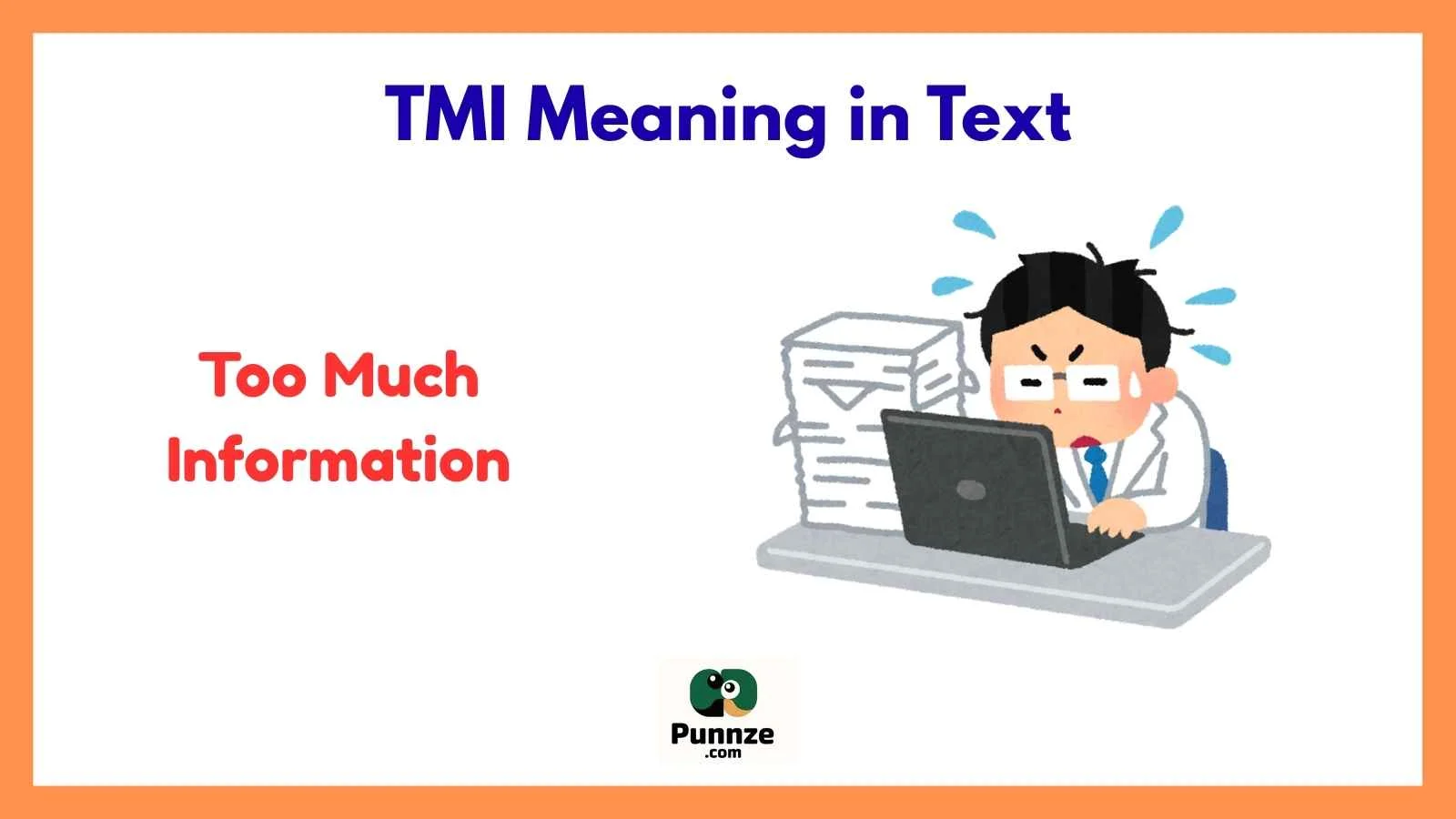
Ever been in a conversation where someone suddenly shares a little too much personal information and you’re left thinking… “Okay, I didn’t need to know that!” 😅 That exact moment is where the phrase TMI meaning in text comes into play.
In today’s digital world, where texting, chatting, and social media dominate communication, abbreviations like TMI help us express reactions quickly and clearly.
But here’s the catch many people use it without fully understanding its tone, context, or proper usage.
This guide breaks everything down in a simple, expert way. Whether you’re a beginner or just want to sound more natural in conversations, you’ll learn how to use TMI like a pro. 🚀
What Does TMI Mean in Text? 🤔
TMI stands for “Too Much Information.”
It’s used when someone shares details that feel overly personal, unnecessary, or uncomfortable for the situation.
- It can be playful 😄
- It can be awkward 😬
- It can even be slightly rude 😐
The tone depends on how and where you use it.
“TMI” is less about what is said and more about how much is shared.”
Origin of TMI (Where Did It Come From?) 📜
The phrase TMI started gaining popularity in the early 2000s with the rise of internet forums, blogs, and later social media platforms.
Before texting culture exploded, people would say the full phrase “too much information.” But as communication became faster, it evolved into the short, catchy acronym we use today.
Now, it’s a global slang term used in:
- Text messages 📱
- Social media posts 💻
- Casual conversations 🗣️
How to Use TMI in Text Conversations 💡
Using TMI correctly is all about tone and timing. You don’t want to offend someone unintentionally.
1. Friendly or Playful Use 😄
Use TMI jokingly with friends when they overshare harmless details.
Example:
“I just told my crush I stalk their Instagram every day 😭”
Reply: “LOL TMI 😂”
2. Light Discomfort 😬
Use it when something feels awkward but not serious.
Example:
“I haven’t showered in 3 days”
Reply: “Okay… TMI 😅”
3. Setting Boundaries 🚧
Sometimes, TMI is used to politely signal discomfort.
Example:
“That’s kind of personal… TMI”
When NOT to Use TMI 🚫
Even though it’s common, there are situations where using TMI can come off as rude.
- Serious conversations (health, emotions)
- Professional or workplace chats
- Talking to someone you don’t know well
In such cases, it’s better to respond with empathy instead of dismissing someone.
Examples of TMI in Real-Life Texts 📲
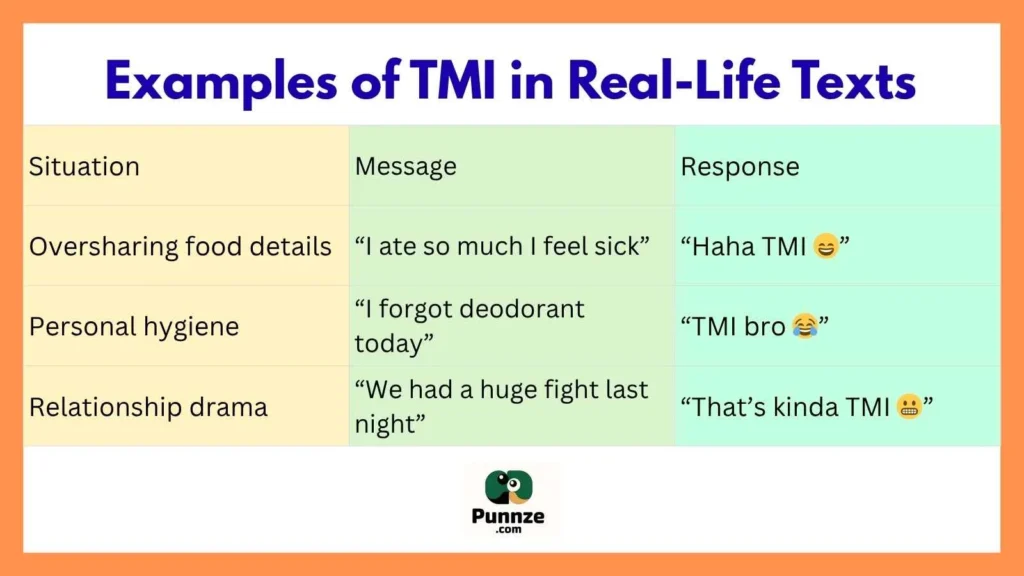
| Situation | Message | Response |
|---|---|---|
| Oversharing food details | “I ate so much I feel sick” | “Haha TMI 😄” |
| Personal hygiene | “I forgot deodorant today” | “TMI bro 😂” |
| Relationship drama | “We had a huge fight last night” | “That’s kinda TMI 😬” |
TMI Tone Guide: Funny vs Rude ⚖️
Here’s a simple breakdown to help you understand how TMI meaning in text changes based on tone:
| Context | Tone | Meaning |
|---|---|---|
| With friends | Playful | Just joking |
| Strangers | Neutral | Mild discomfort |
| Serious talk | Negative | Can feel dismissive |
Why People Use TMI So Often 💬
The popularity of TMI comes from its simplicity and relatability.
- Quick reaction ⏱️
- Easy to understand 📖
- Fits digital communication 💻
It also adds humor to conversations, making chats feel more natural and human.
Similar Slang Words to TMI 🔄
Here are some related expressions you might see:
- Overshare – Sharing too much
- Too personal – Slightly more formal
- Whoa, okay! – Casual reaction
- Keep it to yourself – More direct
Each has a slightly different tone, so choose based on your audience.
TMI in Social Media 📱
On platforms like Instagram, Twitter, and TikTok, TMI is often used in captions or comments.
Example:
“Just cried over a sandwich… TMI? 😭”
Here, it’s used humorously and self-aware — which makes it more engaging.
Psychology Behind “Too Much Information” 🧠
Why do people overshare in the first place?
It often comes down to:
- Seeking connection ❤️
- Emotional release 😌
- Lack of social awareness 🤷♂️
Using TMI helps gently remind someone about boundaries without being overly harsh.
How to Respond Instead of Saying TMI 💡
If you want to be more polite or professional, try these alternatives:
- “That’s quite personal”
- “Maybe too much detail 😅”
- “Let’s change the topic”
These responses maintain respect while still setting boundaries.
Common Mistakes When Using TMI ❌
- Using it in serious conversations
- Sounding sarcastic or rude
- Overusing it in every chat
Balance is key. Use it sparingly for best effect.
Pro Tips to Use TMI Like an Expert 🧑💻
- Know your audience
- Match the tone of the conversation
- Add emojis to soften the message 😊
- Avoid in professional settings
Master these, and your texting style will feel natural and confident.
Internal Resource 📚
Want to learn more texting slang? Check out this guide: Related Article
FAQ:
1. Is TMI rude in text?
It can be, depending on tone. With friends, it’s usually playful. In serious chats, it may feel dismissive.
2. Can I use TMI in professional chats?
No, it’s best avoided in workplace communication as it may seem unprofessional.
3. What does TMI mean on social media?
It means “too much information,” often used humorously when someone overshares.
4. Is TMI still popular?
Yes, it remains widely used across texting and social media platforms.
5. How do I respond to TMI?
You can laugh it off, clarify your message, or simply change the topic.
Conclusion:
Understanding the TMI meaning in text is more than just knowing its definition — it’s about using it with the right tone, timing, and audience.
When used correctly, it adds humor, clarity, and personality to your conversations. But when misused, it can create awkward or even negative interactions.
Keep it light, keep it friendly, and always consider context. That’s the real secret. 😉

I’m passionate about explaining meanings in a straightforward and friendly way. On Punnze, I help readers understand words and ideas without confusion.