
Have you ever read a message like “Can’t wait! FOMO is real 😅” and wondered, what exactly does FOMO mean in text? You’re not alone. FOMO, short for Fear Of Missing Out, has taken over modern communication. It’s more than just slang—it reflects a deep emotional response we all experience in the age of instant updates, social media, and group chats. 🌐
In this article, we’ll explore FOMO in text messages, its origin, usage examples, psychological impact, and tips to handle it effectively. Whether you’re texting friends, managing social media, or simply curious, this guide will give you everything you need. 📝
What Does FOMO Stand For? 🤔
The term FOMO is an acronym for Fear Of Missing Out. It describes the anxiety or worry people feel when they believe others are having rewarding experiences that they are not part of. This feeling often appears in:
- Text messages
- Social media posts
- Group chats
- Email invites
In short, FOMO is that nagging feeling that you might miss out on something fun, exciting, or valuable. 🥳
The Origin of FOMO 📜
FOMO first appeared in print around the early 2000s and gained popularity with the rise of social media. Psychologists noticed that people often experience anxiety seeing friends or peers enjoying events online. The term captured a universal human fear—missing out. 🌟
| Year | Origin/Use |
|---|---|
| 2000s | First coined in social psychology studies |
| 2010s | Gained popularity with social media platforms |
| 2020s | Common in texting, memes, and everyday conversation |
How FOMO Appears in Text Messages 💬
Texting has become one of the primary ways people express FOMO. Here are common examples:
- “Can’t believe I missed the party! Total FOMO 😩”
- “FOMO is hitting me hard, wish I was there 🎉”
- “Everyone’s at the concert… FOMO real 😭”
Notice how emojis enhance the emotional tone, making the FOMO feeling more relatable. Emojis like 😩, 😭, 🎉, or 😅 often accompany such texts. 🌈
Why FOMO Is So Common Today 📱
Modern technology fuels FOMO. Here’s why:
- Social Media Overload: Seeing friends’ stories and posts constantly reminds us of what we’re missing.
- Instant Notifications: Group chats, apps, and emails make it impossible to ignore events.
- Comparison Culture: People compare their lives to curated online images.
This explains why FOMO is not just a casual feeling—it can become a social and emotional challenge. ⚡
FOMO in Different Contexts 🌎
FOMO doesn’t just happen in social life. It also appears in:
- Work: Feeling anxious about missing an opportunity or promotion.
- Investments: Fear of missing out on stocks, crypto, or business trends.
- Learning & Skills: Anxiety over missing courses, workshops, or events.
Psychological Effects of FOMO 🧠
FOMO can influence mental health and decision-making:
- Anxiety & Stress: Constant worry about missing experiences.
- Reduced Satisfaction: Less enjoyment of current moments.
- Impulsive Decisions: Making choices to avoid missing out rather than for personal value.
Tip: Recognizing FOMO is the first step to managing it effectively. Awareness can help reduce its negative impact. 🌟
Examples of FOMO in Text vs Social Media 📝
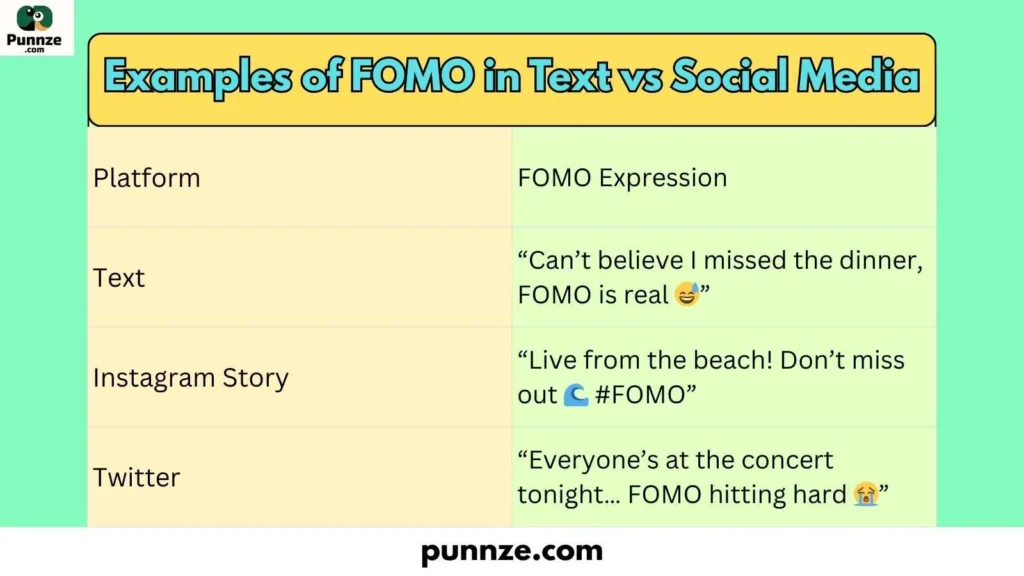
| Platform | FOMO Expression |
|---|---|
| Text | “Can’t believe I missed the dinner, FOMO is real 😅” |
| Instagram Story | “Live from the beach! Don’t miss out 🌊 #FOMO” |
| “Everyone’s at the concert tonight… FOMO hitting hard 😭” |
How to Use FOMO in Text Messages Effectively 💡
FOMO can be playful, funny, or emotional. Here’s how to use it:
- Use FOMO to invite friends: “Don’t miss this! FOMO guaranteed 🎉”
- Express genuine emotion: “FOMO hitting hard 😩, wish I was there”
- Add humor: “FOMO level: expert 😎”
Tips to Manage FOMO in Daily Life ✨
Feeling FOMO can be overwhelming, but here are strategies to reduce it:
- Limit Social Media: Reduce scrolling to prevent constant comparison.
- Practice Gratitude: Focus on what you have instead of what you miss.
- Mindful Decision-Making: Make choices based on personal values, not pressure.
- Connect Offline: Engage in real-life activities without comparing them to online posts.
FOMO vs JOMO: Knowing the Difference 🌸
While FOMO is the fear of missing out, JOMO stands for the Joy Of Missing Out. It’s embracing the peace of staying in or skipping events intentionally. Understanding both can improve your mental health:
- FOMO: Anxiety, worry, comparison
- JOMO: Contentment, relaxation, self-care
Real-Life FOMO Stories 📖
Examples from everyday life:
- Lucy skipped the movie night but felt anxious when everyone posted pictures online. FOMO hit hard 😩
- John decided to attend a networking event he didn’t feel like going to. He experienced temporary relief from FOMO but realized it wasn’t meaningful 😅
- Emma embraced JOMO by spending a quiet evening reading. She felt happy and recharged 🌸
FOMO in Relationships ❤️
FOMO can also impact romantic relationships. For example:
- Constantly checking social media to see if your partner is spending time with others
- Feeling pressure to attend all couple events to avoid missing out
- Overvaluing experiences instead of emotional connection
Business and Marketing FOMO 📈
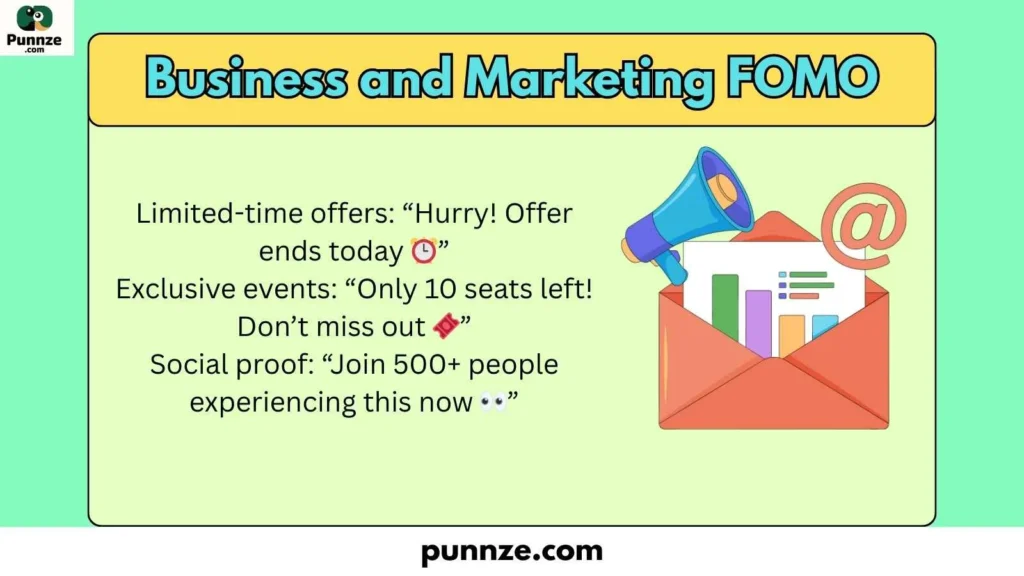
Marketers often use FOMO to encourage engagement or purchases:
- Limited-time offers: “Hurry! Offer ends today ⏰”
- Exclusive events: “Only 10 seats left! Don’t miss out 🎟”
- Social proof: “Join 500+ people experiencing this now 👀”
This technique works because it taps directly into the emotional core of FOMO. ✅
Common FOMO Text Abbreviations and Slang 🆎
Besides “FOMO,” other slang often appears in texting:
- YOLO: You Only Live Once
- TBH: To Be Honest (often to admit feeling left out)
- Lit: Something exciting or fun
FAQs
1. What is FOMO in simple words?
FOMO means the fear or anxiety of missing out on something interesting, fun, or important. It often appears in texts or social media. 😅
2. How is FOMO used in texting?
People use FOMO in messages to express regret, excitement, or social pressure. Example: “FOMO is real, wish I was there 🎉.”
3. Can FOMO affect mental health?
Yes, FOMO can increase stress, anxiety, and reduce satisfaction with your own life if not managed properly. 🌸
4. What is the opposite of FOMO?
The opposite is JOMO—Joy Of Missing Out—which embraces enjoying what you have instead of worrying about what you’re missing. 🌟
5. How can I stop feeling FOMO?
Focus on gratitude, limit social media, make mindful choices, and embrace offline activities to reduce FOMO. ✨
Final Thoughts 🌈
FOMO is a natural feeling in the digital age. Understanding its meaning, origin, and impact helps you use it wisely in text messages and daily life.
Remember, balancing FOMO with JOMO can improve your mental health, social experiences, and overall happiness. 💖

I’m passionate about explaining meanings in a straightforward and friendly way. On Punnze, I help readers understand words and ideas without confusion.